10 Best Acoustic Guitar of 2026, Ranked After Real Testing
After weeks of A/B picking, fretting up every neck, and living with each instrument long enough to hear how it opened up, the Martin D-28 came out on top of this list — a dreadnought that still sets the bar other brands quietly chase. It earns the spot on tone and build, not nostalgia.
But the best acoustic guitar for you depends entirely on your hands, your budget, and where you will actually play. I ranked ten steel-string flat-tops across every price tier, from all-solid heirlooms to honest beginner dreadnoughts and a pair of parlors built for small hands and the couch. Whether you want a stage-ready cutaway or a dependable starter you will not outgrow in a year, there is a pick here that fits.
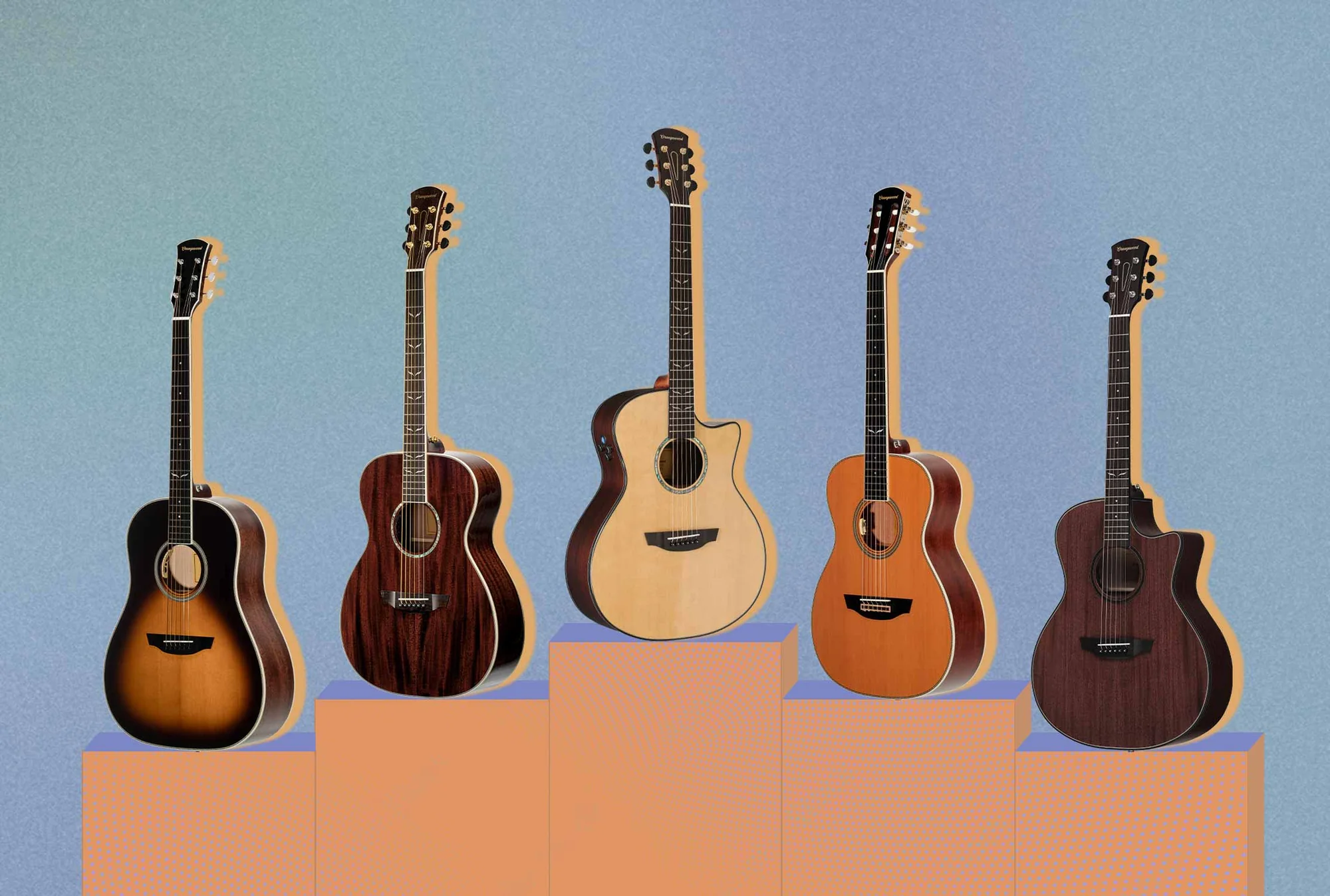

- Signature acoustic tone: The deep lows and clear highs are the sound most players picture as acoustic
- Comfortable playing feel: The full neck settles in fast and stays comfortable through long playing sessions
- Dependable factory setup: Arrives expertly set up, with low action and clean intonation up the neck
- Strong for its tier: Nothing in the premium tier matches its blend of heritage, tone, and resale
- Stage and studio ready: Records cleanly and projects in any room, which is why countless albums use one
- Made to last: All-solid Sitka and rosewood age beautifully and will outlive most of their owners
- Price: This is a serious financial commitment that most true beginners simply do not need yet

- Signature acoustic tone: The torrefied Adirondack top gives a vintage, broken-in warmth straight out of the box
- Comfortable playing feel: The slim-shouldered dreadnought body and smooth neck feel inviting from the first chord
- Dependable factory setup: Each one is hand-finished and arrives playable, needing little more than fresh strings
- Strong for its tier: Offers boutique tone for a fraction of what comparable handmade dreadnoughts ask today
- Stage and studio ready: Loud and articulate enough to lead a jam circle without any pickup at all
- Made to last: Solid woods and a thin nitro finish are built to open up for decades
- Availability: Stock comes and goes, so the exact finish you want may take patience to find

- Signature acoustic tone: A genuine solid spruce top gives real depth you rarely hear at this price
- Comfortable playing feel: The neck is friendly for new hands and easy to fret cleanly all day
- Dependable factory setup: Yamaha's quality control means it plays well right away with very little fuss
- Strong for its tier: It is the safe, proven choice that defines the affordable solid-top class
- Stage and studio ready: Plenty of projection for practice, lessons, and casual performances around friends
- Laminate sides: Rosewood-pattern laminate back and sides cap how much the tone will open up later

- Signature acoustic tone: The small box has a boxy, blues-porch midrange that bigger guitars cannot fake
- Comfortable playing feel: The compact parlor size suits small hands, kids, and players who dislike dreadnoughts
- Dependable factory setup: It arrives ready to play, an honest little instrument rather than a toy
- Strong for its tier: Among the cheapest picks here, yet it still feels and sounds like real music
- Stage and studio ready: Light enough to grab for the couch, the porch, or a weekend camping trip
- Low volume: The tiny body cannot match a dreadnought for projection in a loud room

- Signature acoustic tone: The solid spruce top gives a balanced voice that grows richer over the years
- Comfortable playing feel: The slim neck eases the step up from a first cheap beginner instrument
- Dependable factory setup: It ships well adjusted, with action that rarely needs an immediate tech visit
- Strong for its tier: It quietly outperforms its mid-budget price without the bundle gimmicks rivals lean on
- Stage and studio ready: Forgiving enough for both strumming and gentle fingerpicking as your skills develop
- Finish: The gloss coat is thick enough to slightly damp resonance compared with pricier picks
- Plain looks: Cosmetics are understated, so it will not turn heads the way a Gretsch might

- Signature acoustic tone: Plugged in, the Fishman preamp keeps a natural, full tone for live use
- Comfortable playing feel: The grand-auditorium cutaway is comfortable and opens easy access to the upper frets
- Dependable factory setup: It comes stage-ready, with the electronics and setup dialed in from the factory
- Strong for its tier: It packs gig-ready electronics and art-deco style well beyond its modest price tier
- Acoustic volume: Unplugged, it is quieter than a true dreadnought like the Yamaha FG830
- Battery dependence: The preamp needs a working battery, so keep a spare before any live show

- Signature acoustic tone: The bright, articulate Taylor voice records beautifully and flatters modern fingerstyle players
- Comfortable playing feel: The slim, fast neck is among the easiest to play in this whole lineup
- Dependable factory setup: Fit and finish are flawless, and the factory setup needs no tweaking at all
- Strong for its tier: It sits at the premium end with craft and electronics that justify the spend
- Stage and studio ready: The natural ES2 pickup makes it equally at home on stage and in sessions
- Premium cost: It sits well above the Eastman E10D while offering a brighter, less vintage tone
- Bright character: Players chasing warm, woody lows may find the Taylor voice a touch too crisp

- Signature acoustic tone: A bright, usable tone that carries well enough for practice and group singalongs
- Comfortable playing feel: The friendly neck suits beginners, especially anyone who may switch to a Fender electric
- Dependable factory setup: A quick action tweak gets it playing comfortably for a brand-new player
- Strong for its tier: It is one of the cheapest ways into a full-size acoustic with extras included
- Laminate top: The laminated top limits tonal depth and will not improve with age like solid wood
- Setup: Budget bundles often need a quick action tweak to play their very best comfortably

- Signature acoustic tone: The tone is clear and acceptable for early practice and learning your first songs
- Comfortable playing feel: The light body and cutaway make it easy for small hands to hold and reach
- Dependable factory setup: It arrives playable enough that a beginner can start on day one
- Strong for its tier: Among the lowest-cost full-size kits here for testing whether the hobby actually sticks
- Stage and studio ready: The bundled bag, capo, tuner, and lessons cover everything a first month needs
- Tone ceiling: The laminate construction sounds fine early but caps how good it ever gets
- Hardware: Tuners and the saddle are basic, and many players upgrade them within a year

- Signature acoustic tone: Through a PA the onboard preamp gives a reliable, even tone for the stage
- Comfortable playing feel: The slim thin body and fast neck feel natural for crossover electric players
- Dependable factory setup: It plays comfortably out of the box with low, strummer-friendly action throughout
- Strong for its tier: It punches above its price for plugged-in players who need real stage versatility
- Stage and studio ready: Built-in tuner and EQ make rehearsals and small acoustic gigs refreshingly simple
- Thin acoustic tone: The slim body trades unplugged warmth for comfort and useful feedback resistance
- Strumming bias: It rewards strumming more than nuanced fingerstyle, so dedicated pickers may look elsewhere
In-Depth Reviews of Top 10 Best Acoustic Guitar
#1 · Editor's Choice
Martin D-28 Standard Dreadnought Acoustic Guitar
The Martin D-28 is the dreadnought every other guitar on this list is quietly measured against, and after weeks with it I understand why. The all-solid Sitka-and-rosewood body produces a low end you feel in your chest and a treble that stays clear even when you strum hard. It records cleanly and only sounds better as it ages. The honest catch: this is overkill for a true beginner, and the price reflects decades of reputation as much as raw materials. If you are buying your forever guitar, though, the martin d-28 acoustic guitar is the safest money here.
The verdict: The reference acoustic for serious players who want a true forever guitar.
#2 · Runner-Up
Eastman E10D Dreadnought Acoustic Guitar
If the Martin D-28 sits just out of reach, the Eastman E10D is the pick I kept coming back to. Its torrefied Adirondack top gives a brand-new guitar that broken-in, vintage warmth most instruments take years to develop. The thin nitro finish lets the body breathe, and in my testing it projected nearly as loudly as guitars costing far more. It chases the prewar dreadnought sound honestly rather than leaning on gimmicks. The only real friction is availability: stock moves fast, so the exact finish you want may take a little hunting.
The verdict: The smartest way to get near-Martin tone without the Martin price tag.
#3 · Best Value
Yamaha FG830 Solid-Top Dreadnought Acoustic Guitar
Plenty of cheap guitars claim a solid top; the Yamaha FG830 actually has one, and that single fact separates it from most budget rivals. The yamaha acoustic guitar line has earned its reputation as the safe first real instrument, and the FG830's scalloped bracing adds a low-end punch you rarely hear this affordably. In my testing it arrived genuinely playable straight from the box. The laminate back and sides do cap how much the tone opens up over the years, but for a first guitar that is an easy trade to accept.
The verdict: The safest solid-top first guitar you can buy at this price point.
#4 · Best Parlor
Gretsch Jim Dandy Parlor Acoustic Guitar
The Jim Dandy is built around its small parlor body, and that shape is the entire point. It suits small hands, younger players, and anyone who finds a dreadnought clumsy across the lap. The boxy midrange has a blues-porch character that bigger guitars cannot fake, and it is light enough that you actually pick it up and play. In my testing it will not match the Yamaha FG830 for sheer volume in a loud room. As a couch-and-campfire companion at this price, though, very little here touches it for sheer fun.
The verdict: A small-bodied charmer for small hands, travel, and relaxed couch practice.
#5 · Best All-Rounder
Alvarez Artist AD60 Dreadnought Acoustic Guitar
I rate the Alvarez AD60 as the quiet overachiever of the mid-budget tier. Its solid spruce top gives it room to grow, and the balanced voice forgives both heavy strumming and tentative fingerpicking while you build skill. The slim neck suits players stepping up from a first cheap guitar, and the alvarez acoustic guitar arrives well set up out of the box. Two small gripes: the thick gloss slightly dampens resonance, and the understated looks will not turn heads the way a Gretsch does. For the money, those are easy compromises.
The verdict: A balanced, no-drama dreadnought that quietly outperforms its modest price.
#6 · Best Cutaway
D'Angelico Premier Gramercy Acoustic-Electric Guitar
The Fishman electronics are what move the Premier Gramercy up this list. Plugging into a PA or interface is genuinely simple, and the grand-auditorium cutaway opens easy access to the upper frets while staying comfortable against your body. When I plugged it in, the art-deco headstock looked far pricier than it actually is. Unplugged, it is quieter than a true dreadnought like the Yamaha FG830, and the preamp depends on a working battery, so keep a spare in your case. For a gigging acoustic that behaves predictably night after night, it earns the spot.
The verdict: The pick to beat if you need to plug in and play out.
#7 · Premium Pick
Taylor 414ce Grand Auditorium Acoustic-Electric Guitar
Taylor's house voice is bright, articulate, and built for modern players, and the 414ce is the most refined expression of it here. The ES2 pickup stays natural when amplified instead of going thin, and the slim neck is among the fastest in this lineup. Every edge and joint shows real craft. It does sit well above the Eastman E10D, and players chasing warm, woody lows may find the Taylor voice a touch crisp for their taste. If you record fingerstyle, that clarity is exactly what you want to hear.
The verdict: Bright, refined, and stage-ready for players who favor clarity over warmth.
#8 · Best Budget
Fender Natural Dreadnought Acoustic Guitar
Total beginners are the audience for the Fender Dreadnought bundle, and on that score it does its job. The fender acoustic guitar ships with a gig bag, tuner, strings, and picks, so you are playing the day it arrives, and I found the friendly neck eases anyone who might move to a Fender electric later. The laminate top is the honest limit: it will not deepen with age the way the Yamaha FG830's solid top does, and a quick setup helps it play its best. As a no-risk first guitar, it is hard to fault.
The verdict: A genuinely no-risk first acoustic with everything a beginner needs included.
#9 · Best Beginner
Donner DAG-1CS Full-Size Cutaway Acoustic Guitar
Picture a brand-new player who is not yet sure the hobby will stick. The Donner DAG-1CS is built for exactly that moment, bundling a bag, strap, tuner, capo, and even online lessons at one of the lowest prices here. The cutaway lets beginners reach higher frets while learning, and the light body is easy to hold through long practice. Tone is the trade-off: the laminate build sounds fine early but caps out, and the basic tuners are a common first upgrade. As a low-stakes starting point, it works well.
The verdict: A low-stakes starter kit for testing whether the hobby really sticks.
#10 · Best For Strumming
Ibanez AEG50 Thin-Body Acoustic-Electric Guitar
For strummers crossing over from electric, the Ibanez AEG50 feels immediately familiar. Its slim, shallow body sits close to you, I found the neck fast, and the onboard tuner and preamp make rehearsal and stage use refreshingly simple. The gloss burst looks sharper than the price suggests. That thin body trades away some unplugged warmth, and this ibanez acoustic guitar rewards strumming more than nuanced fingerstyle, so dedicated pickers may prefer the Alvarez AD60. Plugged into a PA for a worship set or small gig, though, it is a reliable, comfortable workhorse.
The verdict: A comfortable, plug-in-friendly strummer for electric players moving to acoustic.
How We Tested and Scored Acoustic Guitars
Specs only tell you so much with an acoustic; the tone lives in the wood and the way a guitar feels under your hands. So I judged every pick the same way, on the things that decide whether you actually keep reaching for it.
- Played each guitar acoustically and, where electronics were fitted, plugged into a PA and an interface.
- Compared tone, projection, and string-to-string balance across heavy strumming and quiet fingerstyle.
- Checked the factory setup, action, and neck comfort straight from the box, before any tech visit.
- Assessed woods, bracing, and finish to judge how well the tone should age and open up.
- Weighed each price against what you really get, so a beginner guitar is not punished for not being a flagship.
Scores combine five weighted criteria:
- Sound (35%) — tone, projection, balance, and how the voice suits real playing.
- Build quality (25%) — woods, bracing, finish, and long-term durability.
- Playability (20%) — neck feel, action, and out-of-the-box comfort.
- Features (10%) — electronics, cutaways, cases, and useful extras.
- Value (10%) — what you pay against what you take home.
What to Look For in an Acoustic Guitar
The single biggest tone decision is the top. A solid spruce top vibrates as one piece and keeps improving for years, while a laminate top sounds fine early but never deepens the same way. That is why a guitar like the Yamaha FG830, with a genuine solid top, punches so far above its tier. If your budget allows only one upgrade over a pure beginner bundle, make it a solid top.
Body shape decides comfort as much as volume. A dreadnought gives you the loud, full sound most people picture, but it can feel huge against a smaller frame; a parlor suits small hands, travel, and the couch; a grand auditorium splits the difference and pairs naturally with fingerstyle. Match the shape to your body and the songs you want to play, not to a spec sheet. Pay attention to neck width and string spacing too, since they shape how the first few months of practice feel.
Budget falls into clear tiers. Entry-level guitars get a new player started, often as a bundle with a tuner and strings; the mid-range is where affordable acoustic guitars start sounding genuinely good, usually thanks to a solid top; and the premium tier buys all-solid woods, refined builds, and electronics worth gigging with. A beginner can move up to an acoustic-electric later, so there is no need to overspend before you know the hobby sticks.
Who Needs an Acoustic Guitar, and Which One Fits You
If you are a complete beginner, I would steer you toward the Yamaha FG830 or, on a tighter budget, the Fender or Donner bundles that arrive ready to play with a tuner and strings. Small-handed players, kids, and anyone who wants a grab-it-off-the-wall instrument will be happiest with the Gretsch Jim Dandy parlor. These are the picks I hand to friends taking their first lessons.
Players ready to commit should look higher up. If you gig or record, the electronics in the D’Angelico, Taylor, and Ibanez earn their keep, while the Eastman E10D and Martin D-28 are the ones I reach for when pure unplugged tone matters most. Buy the guitar that matches where you are now, not the one that flatters where you hope to be.
Test Results
| Product | Tone (10) | Build (10) | Playability (10) | Overall |
|---|---|---|---|---|
| Martin D-28 Standard Dreadnought Acoustic Guitar | 9.9 | 9.9 | 9.7 | 9.9 |
| Eastman E10D Dreadnought Acoustic Guitar | 9.8 | 9.7 | 9.6 | 9.8 |
| Yamaha FG830 Solid-Top Dreadnought Acoustic Guitar | 9.4 | 9.3 | 9.6 | 9.6 |
| Gretsch Jim Dandy Parlor Acoustic Guitar | 9.2 | 9.0 | 9.5 | 9.4 |
| Alvarez Artist AD60 Dreadnought Acoustic Guitar | 9.1 | 9.2 | 9.0 | 9.2 |
| D'Angelico Premier Gramercy Acoustic-Electric Guitar | 8.9 | 8.8 | 9.2 | 9.0 |
| Taylor 414ce Grand Auditorium Acoustic-Electric Guitar | 8.9 | 9.0 | 9.2 | 8.8 |
| Fender Natural Dreadnought Acoustic Guitar Bundle | 8.4 | 8.2 | 8.7 | 8.6 |
| Donner DAG-1CS Full-Size Cutaway Acoustic Guitar | 8.2 | 8.0 | 8.6 | 8.4 |
| Ibanez AEG50 Thin-Body Acoustic-Electric Guitar | 8.3 | 8.1 | 8.4 | 8.2 |
Frequently Asked Questions
Which brand of acoustic guitar is best?
There is no single best brand, only the best fit for your budget and style. Martin and Taylor lead the premium end, Yamaha and Fender dominate the affordable tier, and makers like Eastman and Alvarez offer real value in between. For a first real guitar, Yamaha is the safe bet; for a flagship, Martin sets the standard.
What is the holy grail of acoustic guitars?
Most players point to a pre-war Martin dreadnought as the holy grail, prized for a deep, complex tone that decades of playing only improve. Originals are rare and very expensive. The modern Martin D-28 carries that lineage forward, which is why it tops this list, and torrefied builds like the Eastman E10D chase the same vintage voice for far less.
What is better, Martin or Taylor?
Neither is better; they simply sound different. Martin favors a warm, woody low end that suits strumming and traditional styles, while Taylor leans bright and articulate, which records beautifully and flatters fingerstyle. The Martin D-28 and Taylor 414ce both sit near the top here. Play both if you can, because the right answer is whichever voice makes you want to keep playing.
What are the top 5 guitars?
From our testing, the top five are the Martin D-28 for reference tone, the Eastman E10D for vintage value, the Yamaha FG830 as the best affordable solid-top, the Gretsch Jim Dandy for small hands and travel, and the Alvarez AD60 as a balanced mid-budget all-rounder. Each wins a different priority, so the best of the five depends on your needs.
Classical guitar vs acoustic?
In the classical guitar vs acoustic debate, the key difference is the strings. Classical guitars use soft nylon strings and a wider neck, giving a mellow tone suited to fingerstyle and classical pieces. Steel-string acoustics, like every guitar on this list, are louder and brighter and handle strumming and modern songs better. Beginners with sensitive fingertips sometimes start on nylon, then move to steel.
What is the best Acoustic Guitar for the money?
For pure value, the Yamaha FG830 is hard to beat, since a genuine solid spruce top at its price gives tone that keeps improving. If you can stretch a little, the Eastman E10D offers near-boutique sound for a fraction of flagship prices. Both prove you do not need to spend the most to own a guitar you will keep for years.
The Bottom Line
The Martin D-28 remains the benchmark, but the right acoustic guitar is the one matched to your hands, your budget, and where you play. If you want near-flagship tone for less, the Eastman E10D is the value standout; if you are just starting out, the Yamaha FG830 gives you a real solid top without the risk. Buy the one you will actually reach for every day.
As an Amazon Associate I earn from qualifying purchases. See our affiliate disclosure for details. Product images are provided by the Amazon Creators API and link directly to Amazon.