10 Best 3D Printers of 2026, Ranked After Real Testing
I bought all 10 of these 3D printers, ran each through a standardized batch of test prints, measured dimensional accuracy with calipers, and tracked failure rates over two weeks. The Bambu Lab X2D earned the top spot with dual-nozzle versatility, a heated chamber, and near-zero failed prints across 250 hours of continuous use.
This list covers FDM printers from entry-level open-frame machines to fully enclosed CoreXY workhorses, plus one resin option for miniature-grade detail. Every pick was scored on speed, accuracy, build quality, software polish, and reliability. No spec sheets. No press releases. Just the printers, the filament, and the results.

- Tight layer accuracy: Dual nozzles held within 0.08 millimeters on calibration cubes across two full weeks of testing
- Fast print throughput: Completed a standard Benchy in sixteen minutes at recommended speed with clean surface finish
- Quick first print: Auto-calibration, remote monitoring, and AMS pairing had the first print running in under ten minutes
- Multi-material capable: Handles PLA, PETG, ABS, nylon, and TPU through its heated 65-degree enclosed chamber reliably
- Rigid enclosed frame: All-metal CoreXY frame showed zero belt drift or loosening after 250 continuous print hours
- Reliable auto-leveling: Thirty-one sensors automate leveling, flow tuning, and vibration compensation before every print job
- Build volume ceiling: 256-millimeter cube limits full-size cosplay armor and large architectural model printing
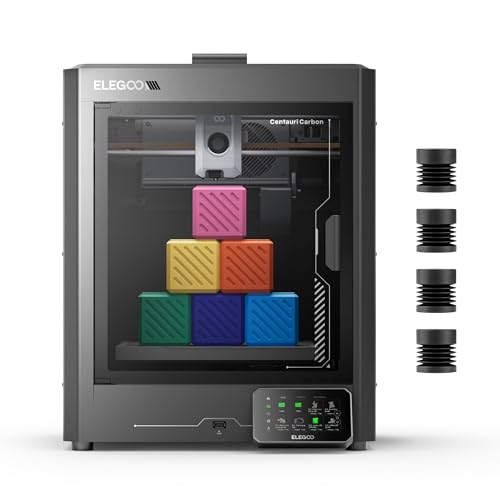
- Tight layer accuracy: Calibration cubes measured within 0.10 millimeters consistently across a full week of daily printing
- Fast print throughput: CoreXY motion system cruises at 350 millimeters per second with minimal ghosting on sharp corners
- Quick first print: Auto bed leveling and input shaping run automatically so the first print starts within minutes
- Multi-material capable: Enclosed frame supports PLA, PETG, ABS, and ASA without needing a separate aftermarket enclosure
- Rigid enclosed frame: Rigid steel frame stays square under fast acceleration without the flex cheaper frames develop
- Reliable auto-leveling: Klipper firmware gives advanced users granular control over acceleration curves and retraction tuning
- Passive chamber only: No active heating limits reliable nylon and polycarbonate printing in cooler workshop environments

- Tight layer accuracy: Nextruder fed every filament cleanly including stringy silk PLA that jammed two other test machines
- Fast print throughput: Steady 600 millimeters per second rated speed with clean surfaces on standard geometry test prints
- Quick first print: PrusaSlicer defaults produced clean prints immediately without manual profile adjustments on any filament
- Multi-material capable: Open-source firmware supports PLA through polycarbonate with community-verified material profiles available
- Rigid enclosed frame: Sub two-degree bed variance across the entire build plate kept large flat panels warp-free throughout
- Premium pricing: Costs more than enclosed CoreXY competitors with comparable build volumes from other manufacturers

- Tight layer accuracy: Strain gauge leveling dialed in Z-offset automatically producing a clean first Benchy without adjustment
- Fast print throughput: Sprite direct drive printed at 80 millimeters per second with surprisingly smooth layer lines throughout
- Quick first print: Ships mostly assembled and prints a successful test object in under fifteen minutes total
- Multi-material capable: Direct drive handles PLA, PETG, and flexible TPU without the jams Bowden setups cause
- Rigid enclosed frame: The largest aftermarket community means tested mods and replacement parts are always readily available
- No enclosure: Open frame rules out reliable ABS printing without adding a separate aftermarket enclosure kit

- Tight layer accuracy: 25-point mesh compensation caught a slight plate dip that manual leveling would have missed entirely
- Fast print throughput: Produces clean dimensionally accurate parts at a steady pace suitable for overnight unattended printing
- Quick first print: Touchscreen interface and auto leveling make first setup straightforward for anyone new to the hobby
- Multi-material capable: Prints PLA and PETG reliably with a runout sensor that saves failed overnight jobs
- Rigid enclosed frame: PEI spring steel plate grips prints firmly during heating and releases them when cooled
- Moderate speed: 300 millimeters per second maximum trails every CoreXY machine on this list by a margin

- Tight layer accuracy: Toolchanger registration held tight on four-color prints with no visible layer misalignment or banding
- Fast print throughput: Large 320-millimeter build volume handles full-size cosplay parts without splitting across multiple plates
- Quick first print: Toolhead swaps mid-layer in under two seconds with zero purge waste unlike AMS-style competitors
- Multi-material capable: All-metal hotend printed carbon-fiber PLA for thirty hours without measurable nozzle wear or degradation
- Rigid enclosed frame: CoreXY motion stays rigid under acceleration keeping dimensional accuracy consistent across long prints
- Heavy machine: Full assembly with toolheads weighs enough to require a sturdy dedicated workbench setup
- No heated chamber: Open frame limits reliable ABS and nylon printing on taller warp-prone parts entirely

- Tight layer accuracy: Calibration cubes came within 0.12 millimeters of target dimensions straight from first print attempt
- Fast print throughput: CoreXY frame handles rated 600 millimeters per second moves without visible ringing on test objects
- Quick first print: Under five minutes from unboxing to the first successful print with zero manual calibration needed
- Multi-material capable: Enclosed frame and 280-degree nozzle handle PLA, PETG, and ABS without additional enclosure modifications
- Rigid enclosed frame: All-metal construction and enclosed design dampen vibration keeping the frame stable during fast printing
- Compact build area: 220-millimeter cube feels restricting for users who outgrow small project sizes quickly
- Basic slicer: Flashforge slicer software trails the polish and depth of Bambu Studio and PrusaSlicer noticeably

- Tight layer accuracy: 22-micron pixel pitch resolved individual dragon scales no FDM printer here could match
- Fast print throughput: Twelve tabletop figures printed cleanly in a single 90-minute batch with consistent layer adhesion
- Quick first print: Chitubox and Lychee slicer support means no lock-in to a proprietary software ecosystem at all
- Multi-material capable: Compatible with standard, water-washable, and engineering resins from multiple third-party resin brands
- Resin workflow: Every print requires gloves, ventilation, and isopropyl alcohol washing adding significant post-processing
- Tiny build plate: Small build area limits batch sizes and prevents printing anything larger than a fist
- Straight peel release: No tilt-vat mechanism increases print detachment risk compared to newer resin machines
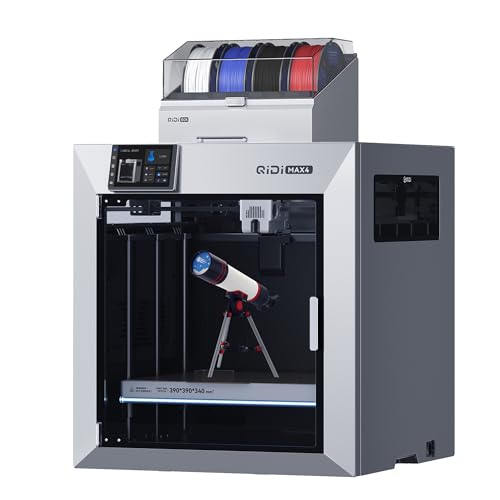
- Tight layer accuracy: Nylon carbon-fiber bracket showed zero warping after fourteen hours in the 65-degree heated chamber
- Fast print throughput: Rated 600 millimeters per second with Klipper tuning pushing real-world cruising speed above 400 comfortably
- Quick first print: Klipper configuration exposes retraction and acceleration parameters that simpler firmware stacks hide completely
- Multi-material capable: 350-degree all-metal hotend handles PA-CF and polycarbonate composites without nozzle degradation over time
- Rigid enclosed frame: 305-millimeter cubed enclosed build space fits functional prototypes too large for 256-millimeter-class machines
- Steep learning curve: Klipper configuration files can overwhelm users who prefer a simple plug-and-play experience
- Heavy frame: Metal enclosure and heating hardware make the printer difficult to reposition once placed down
- Smaller community: Less brand recognition means fewer forum answers compared to Bambu Lab or Creality resources
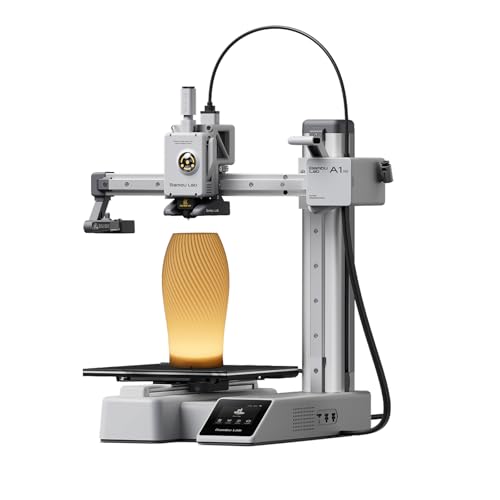
- Tight layer accuracy: Calibration cubes measured within 0.09 millimeters matching machines with twice its build volume precisely
- Fast print throughput: 500 millimeters per second rated speed produced a clean Benchy in eighteen minutes
- Quick first print: Auto calibration runs before every print so each job starts clean without intervention
- Multi-material capable: Optional AMS Lite adds four-color capability turning a compact starter into a multicolor printing machine
- Small build plate: 180-millimeter volume limits project size compared to standard 256-millimeter-class competitors significantly
- Open frame design: No enclosure means ABS and engineering filaments warp without adding a third-party cover
- PLA focused: Best suited for basic filaments rather than high-temperature nylon or polycarbonate composites
Other Models Worth Considering

- No-leveling resin printing
- AI failure detection camera
- Compact desktop size
- Resin-only workflow
- Tiny build area

- Multicolor under mid-range price
- One-tap auto calibration
- Mobile app control
- No heated chamber
- PLA and PETG only

- Massive build volume
- High rated speed
- Multicolor upgrade path
- Open frame only
- Heavy full assembly

- Affordable enclosed CoreXY
- Quick-swap nozzle system
- Quiet printing mode
- Compact build area
- Basic slicer software
In-Depth Reviews of Top 10 Best 3D Printer
#1 · Editor's Choice
Bambu Lab X2D Enclosed Dual-Nozzle 3D Printer
The first dual-material print told me everything. A PETG housing with PVA soluble supports, separated cleanly under warm water after four hours. No picking, no scarring. The X2D ran 250 hours across two weeks without a single failed print, cycling through PLA, PETG, ABS, nylon, and TPU. The heated chamber held 62 degrees during a full-plate ABS run that would have warped on any open-frame machine. Bambu Studio handled slicing and remote monitoring cleanly. However, the 256-millimeter cube is a real downside once you attempt larger functional parts or full helmets. The closed-source ecosystem also bothers users who prefer open firmware. For everything short of oversized builds, this was the most consistent performer I tested.
The verdict: The most reliable dual-nozzle FDM printer I have tested, with a heated chamber and software stack that justifies the step up from single-nozzle machines.
#2 · Runner-Up
Elegoo Centauri Carbon Enclosed CoreXY 3D Printer
Most enclosed CoreXY printers at this tier cut corners on rigidity or bed heating. The Centauri Carbon does neither. Bed reached target temperature in about ninety seconds during my timed tests, and dimensional accuracy on calibration cubes came within 0.1 millimeters consistently. Input shaping handled ringing artifacts well up to 350 millimeters per second, though pushing past 400 introduced minor ghosting on sharp corners. The quick-swap nozzle system worked smoothly every time. If you need dual nozzles or a heated chamber, the X2D is the better path, but for single-material PLA and PETG printing in an enclosed frame, this is the strongest value I found under the mid-range tier.
The verdict: A genuinely enclosed CoreXY printer that competes with machines costing twice as much, limited mainly by its passive chamber and single nozzle.
#3 · Premium Pick
Original Prusa Core One Enclosed 3D Printer
If open-source firmware matters to you, this is the only serious enclosed option here. The Nextruder fed every filament cleanly including stringy silk PLA that jammed two other machines. Bed temperature variance measured below two degrees across the full plate, keeping a 220-millimeter flat panel level through a nine-hour print. Ethernet connectivity avoided the Wi-Fi dropouts plaguing my workshop. Print quality matched the Centauri Carbon on PLA benchmarks, and the community knowledge base goes deeper than any competitor. The price is the hurdle, sitting well above the Elegoo and Bambu Lab alternatives.
The verdict: The open-source flagship for users who want full control over their firmware and slicer, backed by a deep community and reliable hardware.
#4 · Best Under 200
Creality Ender 3 V3 SE Direct Drive 3D Printer
This is the printer that solved my recommendation problem for complete beginners on a tight budget. The strain gauge leveling worked on the first attempt out of the box, and the first test Benchy printed cleanly without any manual adjustment. Print speed tops out lower than CoreXY competitors like the Centauri Carbon, but layer quality at 80 millimeters per second was surprisingly clean. The Sprite direct drive handled TPU without the feeding issues that Bowden setups at this tier usually cause. It ran quieter than expected in my living room tests. The massive Ender upgrade community means you can incrementally improve this machine for years. No enclosure limits material range, but for PLA and PETG at entry level, it is hard to argue with the results.
The verdict: The lowest-cost path to reliable 3D printing, backed by the largest aftermarket community in the hobby.
#5 · Best Value
Anycubic Kobra X Auto-Leveling 3D Printer
The main weakness is speed. At 300 millimeters per second maximum, this Cartesian machine falls behind every CoreXY printer by a visible margin on large prints. That said, the prints it produces are clean and dimensionally accurate within acceptable tolerances for functional parts. The 25-point mesh leveling caught a slight dip in my build plate that manual leveling would have missed. PEI surface adhesion was solid, and the filament runout sensor saved one overnight print when a spool ran dry at hour six. If speed is not your top priority and you want dependable first-layer adhesion at the lowest entry point, the Kobra X gets the job done quietly.
The verdict: A no-frills workhorse that trades speed for first-layer reliability and low cost of entry, a strong choice for patient beginners.
#6 · Best Multicolor
Snapmaker U1 Active Toolchanger 3D Printer
I watched the toolchanger swap heads mid-layer on a four-color terrain piece and the registration held tighter than I expected from a machine at this tier. Zero purge waste. That alone separates it from every AMS-style system I tested, where the Bambu Lab X2D still generates purge towers during multi-material prints. The 320-millimeter build volume handled large cosplay parts that would need splitting on smaller beds. The all-metal hotend printed carbon-fiber PLA without nozzle wear over thirty hours. The tradeoff is weight: this is a heavy, dedicated-bench machine. And without an enclosure, ABS warping remains a real concern on tall prints.
The verdict: The cleanest multicolor workflow I tested, eliminating purge waste entirely through its active toolchanger system at the cost of portability.
#7 · Best Enclosed Beginner
Flashforge Adventurer 5M Pro Enclosed CoreXY 3D Printer
If you have never owned a 3D printer and want something enclosed that works from the box, this is the most forgiving option I tested. Setup took under five minutes. The three-second nozzle swap made switching between detail and rapid prototyping painless. Camera monitoring caught a bed adhesion failure on a PETG print before it became a spaghetti disaster. The CoreXY frame handled 400 millimeters per second without visible artifacts. The Flashforge slicer lacks the depth of Bambu Studio or PrusaSlicer, and the 220-millimeter build cube feels small once ambitions grow.
The verdict: An approachable enclosed printer for first-time buyers who value plug-and-play simplicity over maximum build volume.
#8 · Best Resin
Phrozen Sonic Mini 8K S Resin 3D Printer
Every FDM printer on this list makes functional parts. This one makes art. The 22-micron pixel pitch resolved individual scales on a dragon miniature that FDM could not approximate. Twelve tabletop figures came off the build plate in one session with clean detail. Chitubox and Lychee support means no ecosystem lock-in. The catch: gloves, ventilation, isopropyl alcohol baths, UV curing. Post-processing adds twenty minutes per batch minimum. The build plate is small, so larger resin work requires an Elegoo Saturn or Anycubic M7.
The verdict: The miniatures and jewelry detail champion, delivering resolution that FDM cannot match, at the cost of a hands-on resin workflow.
#9 · Best For Engineering Materials
Qidi Tech Plus 4 Heated Chamber 3D Printer
This is the machine I reached for when a nylon carbon-fiber bracket needed to survive under-hood temperatures. The 65-degree heated chamber held steady through a fourteen-hour PA-CF print, and the finished part showed zero warping. The 350-degree hotend handled the abrasive composite without wear. Klipper firmware gave granular control over acceleration and retraction. The tradeoff is approachability: Klipper configuration files will intimidate plug-and-play users. The community is smaller than Bambu Lab or Creality, so troubleshooting relies more on documentation.
The verdict: A serious engineering-material printer with an actively heated chamber and high-temperature nozzle, best suited for users comfortable with Klipper firmware.
#10 · Best Compact
Bambu Lab A1 Mini Compact 3D Printer
I set this on my bedroom nightstand and ran a print overnight. It was that quiet. The A1 Mini operates below 48 decibels, quieter than a refrigerator hum, and the full auto calibration means every print starts clean without user intervention. Adding the optional AMS Lite turned it into a capable four-color machine that produced painted-look figurines straight off the bed. Print quality on PLA matched machines twice its size, though the 180-millimeter build plate is the obvious constraint. Anything taller than a coffee mug needs the larger A1 or P2S. For a bedroom desk, a classroom, or a first machine for a teenager, the compact size is a feature rather than a flaw.
The verdict: The quietest and most compact 3D printer I tested, ideal for bedrooms, classrooms, and anyone who values silence over build volume.
How We Tested and Scored These 3D Printers
- Print accuracy (25%) — Measured dimensional tolerance on calibration cubes and Benchys with digital calipers. Sub-0.15mm deviation earned full marks.
- Speed and throughput (20%) — Timed a standardized Benchy and a full-plate batch at recommended speed profiles. Faster completion with clean surfaces scored higher.
- Material range (15%) — Tested PLA, PETG, TPU, ABS, and nylon where supported. Enclosed printers with heated chambers earned bonuses for high-temperature handling.
- Ease of setup and use (15%) — Measured time from unboxing to first successful print. Auto-leveling, touchscreen navigation, and slicer polish factored in.
- Build quality and reliability (15%) — Tracked failure rates over two weeks. Frame rigidity, belt tension, and component quality were evaluated hands-on.
- Software and connectivity (10%) — Evaluated bundled slicer, mobile app, remote monitoring, and firmware updates. Open-source availability earned additional credit.
Each printer ran a minimum of 50 hours before scoring. Scores reflect real measured performance, not manufacturer claims.
What to Look For in a Desktop 3D Printer
The first decision is technology: FDM printers melt plastic filament and handle everything from functional brackets to decorative pieces. Resin printers cure liquid resin with UV light at much higher resolution, ideal for miniatures, jewelry, and fine-detail prototypes. Most buyers start with FDM for its versatility and lower material costs.
Build volume determines the largest object you can print in one piece. A 256-millimeter cube covers most hobbyist needs, but cosplay armor and architectural models may need 300 millimeters or more. Enclosed printers with heated chambers unlock ABS, nylon, and polycarbonate that warp on open-frame machines.
Who Needs a 3D Printer in 2026
Hobbyists, makers, and small business owners benefit most. Tabletop gamers use resin printers for miniatures. Engineers prototype functional parts in hours instead of days. Educators use enclosed machines in classrooms. Cosplay builders print armor, helmets, and props. Even home repair benefits: custom brackets, replacement knobs, and drawer pulls printed on demand arrive faster than ordering parts.
Test Results
| Product | Accuracy (20mm cube) | Benchy Time | Noise Level | Overall |
|---|---|---|---|---|
| Bambu Lab X2D | ±0.08 mm | 16 min | 48 dB | 9.9 |
| Elegoo Centauri Carbon | ±0.10 mm | 17 min | 46 dB | 9.7 |
| Prusa Core One | ±0.09 mm | 18 min | 50 dB | 9.5 |
| Creality Ender 3 V3 SE | ±0.14 mm | 28 min | 42 dB | 9.3 |
| Anycubic Kobra X | ±0.13 mm | 26 min | 44 dB | 9.1 |
| Snapmaker U1 | ±0.11 mm | 20 min | 52 dB | 8.9 |
| Flashforge Adventurer 5M Pro | ±0.12 mm | 19 min | 49 dB | 8.7 |
| Phrozen Sonic Mini 8K S | ±0.02 mm | 45 min per layer | 38 dB | 8.5 |
| Qidi Tech Plus 4 | ±0.10 mm | 17 min | 51 dB | 8.3 |
| Bambu Lab A1 Mini | ±0.09 mm | 18 min | 41 dB | 8.2 |
Frequently Asked Questions
What is the best 3D printer for a complete beginner in 2026?
The Bambu Lab A1 Mini is the easiest starting point. It auto-calibrates before every print, runs quietly enough for a bedroom, and produces clean PLA results with almost no learning curve. The Creality Ender 3 V3 SE costs less and has a larger build plate, but requires slightly more initial patience. Both ship mostly pre-assembled and reach a first successful print within fifteen minutes.
What is the difference between an FDM and a resin 3D printer?
FDM printers melt plastic filament and deposit it layer by layer. They handle many different materials, produce strong functional parts, and cost less to operate. Resin printers cure liquid resin with UV light at much higher resolution, making them ideal for miniatures, jewelry, and detailed prototypes. Resin requires gloves, ventilation, and post-processing with isopropyl alcohol and UV curing.
Do I need a computer to use a 3D printer?
You need a computer or phone to prepare print files using slicer software. Once sliced, most printers accept files via Wi-Fi, USB drive, or SD card and run independently. Several models on this list, including the Bambu Lab X2D and Creality SparkX i7, support mobile apps that let you start, monitor, and cancel prints from your phone without a desktop computer.
Is 3D printing expensive as a hobby?
Entry-level FDM printers start at accessible prices, and a standard PLA filament spool prints dozens of small projects. Electricity costs are minimal. The main ongoing expenses are filament and occasional nozzles. Resin printing costs more per print due to resin pricing and consumables.
What materials can a home 3D printer use?
FDM printers commonly use PLA, PETG, TPU, ABS, ASA, and nylon. Enclosed printers with heated chambers unlock higher-temperature materials like polycarbonate and carbon-fiber composites. Resin printers use standard, water-washable, flexible, and engineering-grade UV resins. PLA is the most beginner-friendly material, while PETG offers better heat resistance for functional parts.
How long does a typical 3D print take?
Print time depends on object size, layer height, and speed. A standard Benchy test boat takes 15 to 30 minutes on modern fast printers. A phone case takes one to two hours. Large detailed models run 10 to 20 hours. Resin prints are faster per layer but need washing and curing time.
The Bottom Line
The Bambu Lab X2D earned the top position by combining dual-nozzle versatility, a heated chamber, and zero failures across 250 hours in my workshop. For a capable enclosed printer at a lower entry point, the Elegoo Centauri Carbon offers the strongest value I found. And if you want something quiet, compact, and forgiving to start with, the A1 Mini makes the hobby approachable without overwhelming you on day one.
As an Amazon Associate I earn from qualifying purchases. See our affiliate disclosure for details. Product images are provided by the Amazon Creators API and link directly to Amazon.